
Turning a static online presence into a structured lead generation system.
This case study demonstrates how a service-based business can move from scattered lead handling to a more intentional system using a landing page, funnel flow, calendar booking, and automation inside a CRM environment.
System Summary
Designed for clarity, conversion, and follow-through
Core Goal
Bookings
Built backward from the desired conversion event
Entry Point
Landing Page
Focused message and clear CTA
Support Layer
Automation
Follow-up and pipeline visibility
Approach
System-First
Design supports conversion, not the reverse
This is a strategic demonstration project created to show how I structure lead generation systems for service-based businesses. It is presented as a systems example, not as a live client reporting dashboard.
The challenge
The website existed,
but the system behind
it did not.
Many businesses already have traffic sources, referrals, or a basic website in place. The problem is that inquiries often fall into a weak structure: no clear direction, no consistent follow-up, and no visibility on where leads stand after first contact.
That creates a familiar pattern: people visit, some show interest, but too many opportunities stall because there is no connected journey from visitor to booked call.
No clear call-to-action guiding the visitor forward
No structured lead funnel from interest to appointment
Manual follow-up causing delays and inconsistency
No pipeline view to track who needs action next
The objective
Instead of starting with visuals alone, the system was planned around a single question:
How do we move a visitor from first click to qualified conversation with less friction?
Landing Page
Clarify the offer, reduce distraction,
and create a strong first action.
Funnel Flow
Guide the visitor through a clear sequence instead of leaving them to wander.
Calendar Booking
Convert intent into a scheduled conversation without manual back-and-forth.
Automation
Follow up automatically so leads do not go cold after their first interaction.
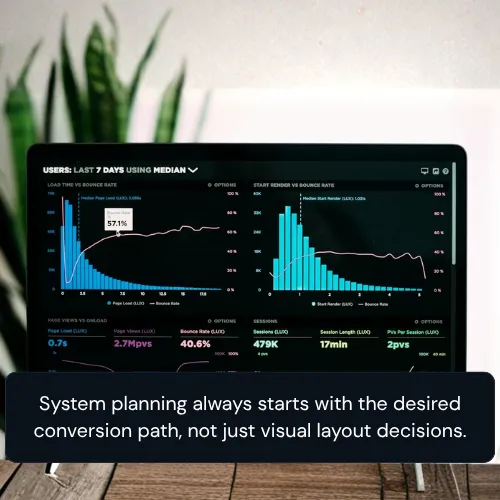
System architecture
What was built inside the
lead generation flow.
The implementation centers around a simple but connected structure. Each element plays a role in moving the lead forward while keeping the business owner informed.
Conversion-focused landing page with clear positioning and CTA
Multi-step funnel sequence to guide the visitor logically
Lead capture form to collect qualification details
Calendar integration to reduce booking friction
Email and SMS automation for reminders and follow-up
Pipeline tracking for stage-by-stage lead visibility
Design supports the system. The system is what creates movement.
Core approach behind this implementation
System visualization
Example dashboard showing
how lead flow is tracked across
the pipeline.
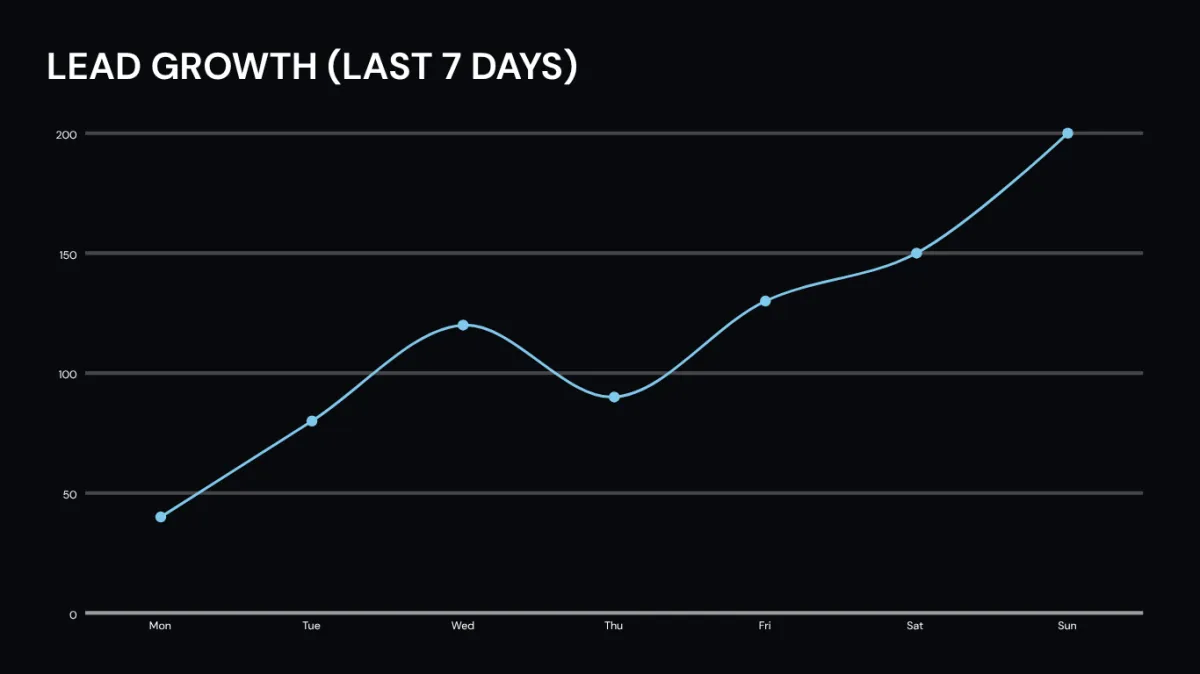
This visual demonstrates the type of CRM environment used to track incoming leads, movement through stages, booking activity, and conversion visibility. It exists to illustrate the operating logic of the system.
LeadFlow CRM
TOTAL LEADS
147
+12 from last week
CONTACTED
89
60.5% of total
BOOKED CALLS
32
+4 in 24h
CONVERSION RATE
18.3%
+2.2% MoM
NEW LEAD
Mia Carter
Email Signup
2h ago
Liam Roberts
Chat Lead
5h ago
Sofia Mendez
Form Submit
1d ago
CONTACTED
Noah Thompson
Called
1h ago
Emma Wilson
Sms sent
3h ago
Oliver Lee
Follow-up
1d ago
BOOKED CALL
Ava Garcia
2pm Tomorrow
6h ago
Ethan Clark
10am Tomorrow
1h ago
WON CLIENT
Charlotte Hall
Paid Plan
2d ago
Lucas Perez
Annual Plan
3d ago
The dashboard visual is included to show the structure of a working lead system: stage visibility, response handling, booking progression, and simple conversion
tracking.
New Lead
Captures inquiries as soon
as they enter the system so
no opportunity begins untracked.
Contacted
Shows which leads have already received outreach or automated first-touch communication.
Booked Call
Highlights high-intent leads
who have moved beyond interest into scheduled conversations.
Won Client
Provides a clear picture of what the system is ultimately designed to support: conversions.
What this enables
Operational clarity that most small business websites never reach.
The strongest gain from a system like this is not just “more leads.” It is what happens after a lead enters. The business can now track, respond, follow through, and reduce drop-off with more consistency.
Cleaner handoff from website visitor to booked conversation
Reduced dependence on manual follow-up memory
More visibility into pipeline stages and next actions
Better structure for scaling future outreach or paid traffic
Key takeaway
Most businesses do not only
have a traffic problem. They
have a system problem.
A website by itself does not create dependable outcomes. What changes the result is the system behind it: messaging, user flow, booking logic, and follow-up.
That is why this implementation focuses on building a lead journey that works as a connected mechanism instead of isolated design pieces.
Before
Traffic and interest can easily disappear without structured progression.
After
Every interaction has a place, a follow-up path, and a measurable next step.
Work with me
If your website feels more
like a brochure than a lead
system, that’s what I fix.
I help service-based businesses build conversion-focused systems using landing pages, funnels, CRM structure, and automation so traffic has a better chance of turning into real conversations.
What I can help you build
Landing page with stronger conversion structure
Simple lead funnel aligned to your offer
Calendar and form setup
Automation flow for follow-up and reminders
CRM pipeline visibility inside GHL